
Knoxville People Directory Choices
Knoxville people directories are not one master list. City and state pages identify public offices. The University of Tennessee directory names faculty and staff. Knox County property tools connect owners with parcels, while the Register of Deeds indexes parties to land records. McClung Historical Collection carries the long view through city directories, telephone books, obituaries, and biography files. Each directory describes a different role, place, or date, so a match should be read in that narrow context.
| Knoxville directory | Names represented | Record keeper | How to browse |
|---|---|---|---|
| City departments and boards | Officials, department contacts, appointed members | City of Knoxville | Free organizational pages |
| Tennessee directory hub | State staff, agencies, officials, law enforcement | State of Tennessee | Free linked directories |
| UT Knoxville directory | University faculty and staff | University of Tennessee | Free name search |
| Assessor and KGIS | Current owners and tax mailing contacts | Knox County and KGIS | Free name, address, or parcel search |
| Register indexes | Grantors and grantees in recorded instruments | Knox County Register of Deeds | Free legacy index; subscription or counter for current data |
| McClung directories | Past residents, households, businesses, subscribers | Knox County Public Library | Reference-room access |
Start with the directory tied to the person’s known role. A campus connection points to UT. A parcel or street points to KGIS and the Assessor. A department name points to City or state government pages. An old Knoxville address belongs in a year-specific city or phone directory. The full procedures for obtaining source documents remain distinct from this directory view; those rules are explained with Knoxville public records access.
UT Knoxville Faculty Directory
The UT Knoxville faculty and staff directory accepts a name query and limits its public scope to faculty and staff. It is not a public student or alumni roll. A typical official entry can place the same person in a college, department, building, and public-facing role. Campus context helps separate people who share a name, but work contact data should not be treated as a home address.
| Search input | Faculty or staff name |
|---|---|
| Name | Public directory identity |
| Title | Academic or administrative role |
| Campus and room | Work location when published |
| Phone and email | Institutional contact when listed |
| Profile | Linked unit biography when available |
The captured UT directory search shows the public entry point for a Knoxville campus name query.
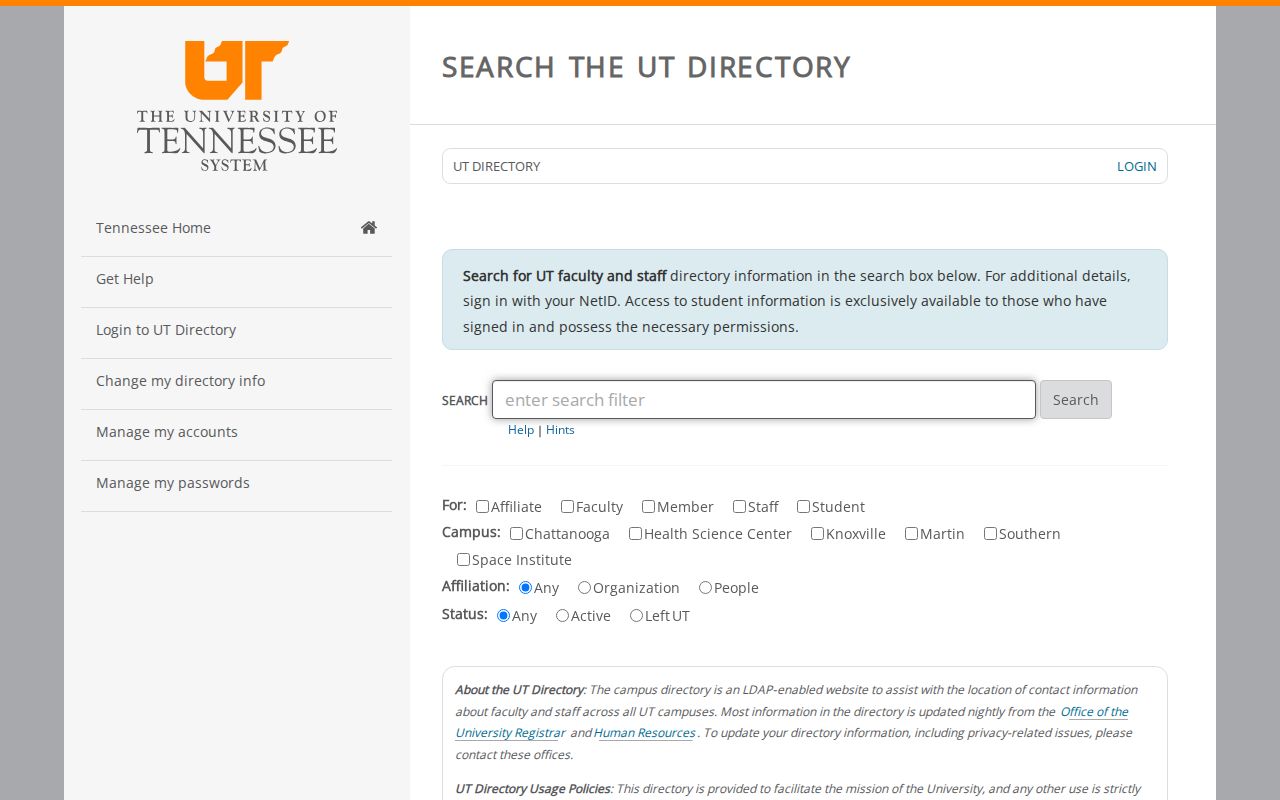
The tool’s narrow institutional scope is useful: a result supports a UT work connection, not a claim about every person in Knoxville with that name.
Knoxville School Directory Routes
The Knox County Schools site separates district information from individual school pages. Its navigation exposes a staff-directory route, but the previously indexed form migrated and its exact live fields could not be verified. Browse the district and school connected with the name, then use the named office or school main contact when no public entry appears. Do not assume that every teacher or staff member must be listed.
The captured Knox County Schools directory entry point is a sound starting place even when an old direct directory URL fails.

A school-level page can supply the missing organizational context before a caller asks the district to route a public contact request.
Note: A missing school-directory result may reflect a moved page or limited public display, not a finding that the person has no Knox County Schools connection.
Knoxville Government Directory Paths
Knoxville government directories follow the organization chart. The City publishes department, board, elected-official, and office pages rather than one verified all-employee name search. Start with the function, such as Development Services, Police Records, or the City Recorder route, then use the listed work contact. For statewide personnel and officials, the Tennessee directory hub branches to employee, department, official, legislator, and law-enforcement listings.
| Person or office | Named public contact when the unit publishes one |
|---|---|
| Role and department | The authority or service tied to that contact |
| Work phone | Direct line or department main line |
| Work email | Named or shared office mailbox when published |
| Office location | Public building or room when the page supplies it |
The City department directory shows how Knoxville routes people through offices.
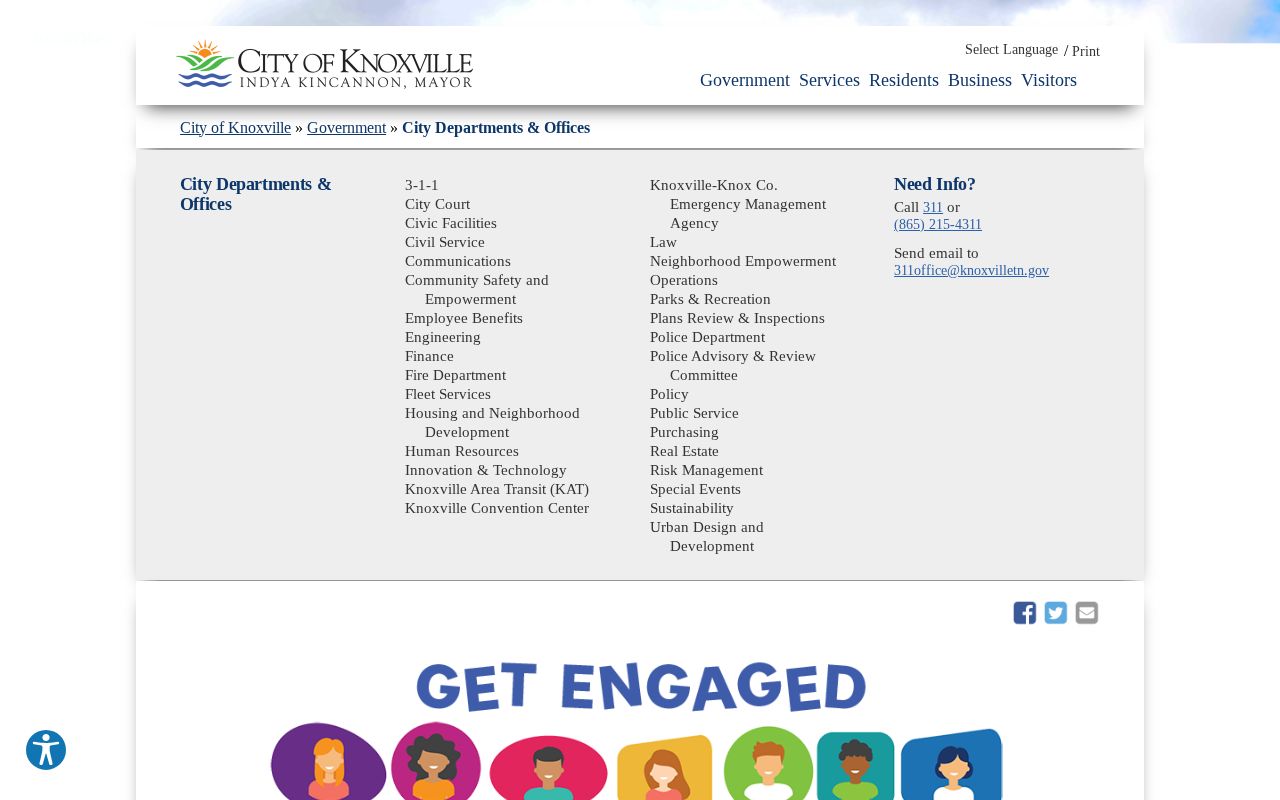
If a name is absent, call 311 or the department main line. A focused records request is the next channel only when an existing public record, rather than a live staff referral, is actually needed.
The Tennessee directory hub adds state and official listings that local City pages do not carry.
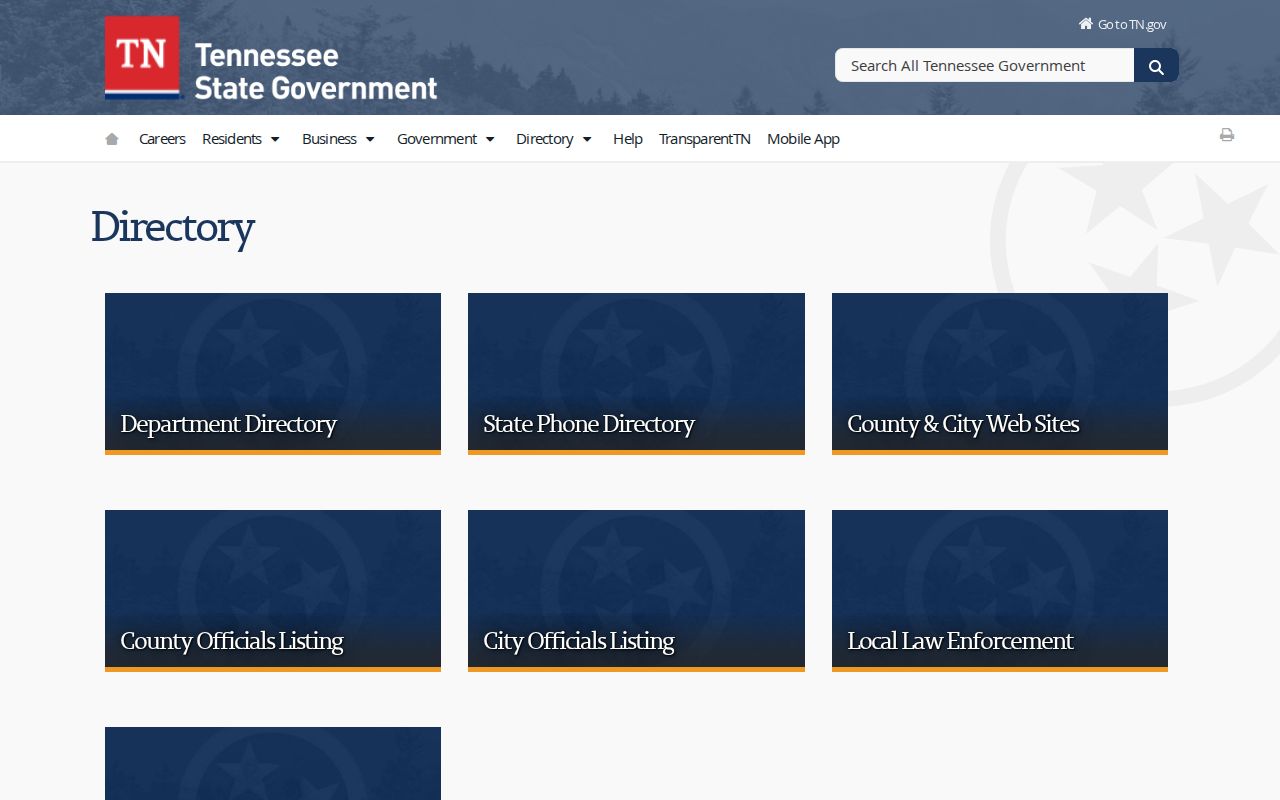
This tiered structure prevents a City department contact from being mistaken for a county or state custodian.
Knoxville Property Owner Directories
The Knox County Property Assessor and KGIS Maps work as current owner directories. The Assessor accepts owner name, property address, or parcel number. KGIS adds Owner, Address, Parcel, Place, and Other modes; owner search allows a substring. The map can connect a parcel to an owner card, mailing address, site address, subdivision, plat, tax district or City ward. Mailing address means where tax mail goes, not where the owner lives.
Owner, occupant, and situs: the owner holds the assessed interest, the occupant uses the place, and the situs is the property’s physical location. One directory entry does not prove all three are the same person or address.
A postal Knoxville address may sit outside City limits. KGIS ward and county-tax-district fields help choose the City or County directory and permit source. The Assessor also provides an unlisted-ownership request channel, so no public web name is not proof that the office lacks ownership data.
Knoxville Deed Party Directories
The Knox County Register of Deeds turns recorded instruments into a long-running party directory. Its free legacy tool covers scanned index pages from 1786 through 1931. Four index families separate people and corporations, then grantors from grantees. A grantor gives or transfers an interest; a grantee receives it. Search the person in the correct role, then use the book and page to reach the underlying instrument.
Current remote records use a subscription database that costs $40 per month, with six months and a $25 setup fee prepaid when opening an account. Counter, phone, mail, and the deed-copy request remain alternatives. Those channels matter because an alphabetic image index does not behave like a modern exact-name form. A deed party also may be a trustee, fiduciary, or entity representative rather than an occupant.
Knoxville Professional Directory Searches
Tennessee’s official license systems can form a current professional directory around Knoxville. Commerce and Insurance supports individual or business name, license number, city, county, and license-type routes, depending on the board. Health license verification uses name, place, profession, license number, and a required CAPTCHA. A Knox County Health Licensure Report can go farther by producing a county roster with optional practice contact, training, specialty, qualification, or demographic columns.
Use the official Tennessee license verifier for credential status, then check the relevant board when discipline or a full profile is available. The Secretary of State business search is a separate directory of legal entities, filing status, principal office, and registered agent. An agent receives legal papers and is not necessarily the operating owner. Knoxville Beer Board agendas and applications can identify owners and managers for local beer permits when the general business-tax page has no public name register.
McClung Knoxville Directory Collection
The Calvin M. McClung Historical Collection holds complete Knoxville city directories from 1859 to the present and telephone directories from 1898 to the present. City directories are available without a special request; phone books come through the reference desk. Materials do not circulate. Regular reference use needs no appointment, while special collections are used by appointment. Microfilm copies cost $0.25 per page.
| Collection | Coverage | What a name can reveal | Access |
|---|---|---|---|
| City directories | 1859 to present | Resident, occupation, household, address, business | Open reference use |
| Telephone directories | 1898 to present | Subscriber, number, listed address | Request at reference desk |
| Biography files | Built since the 1920s | Obituary and biographical newspaper material | Reference inquiry |
| Obituary indexes | 1885 to 1906; 1991 to present | Surname, publication detail, age or death place when indexed | Index and copy request |
The captured McClung collection overview documents this unusually deep directory run.

The dates make the collection useful for following Knoxville residents across more than one generation, but the entry for a given year only supports that year’s published listing.
Digital Knoxville Name Collections
The McClung Digital Collection offers general search, advanced search, Browse All, collection limits, and exact-phrase options. Its Knoxville College Archives, family Bibles, East Knoxville slides, exposition newspapers, county archive images, and 1982 World’s Fair records can place a name within a school, family, neighborhood, event, or institution. Catalog metadata is searchable, and some printed or manuscript items include transcripts.
The captured digital collection guide leads into those Knoxville directory-like sources.
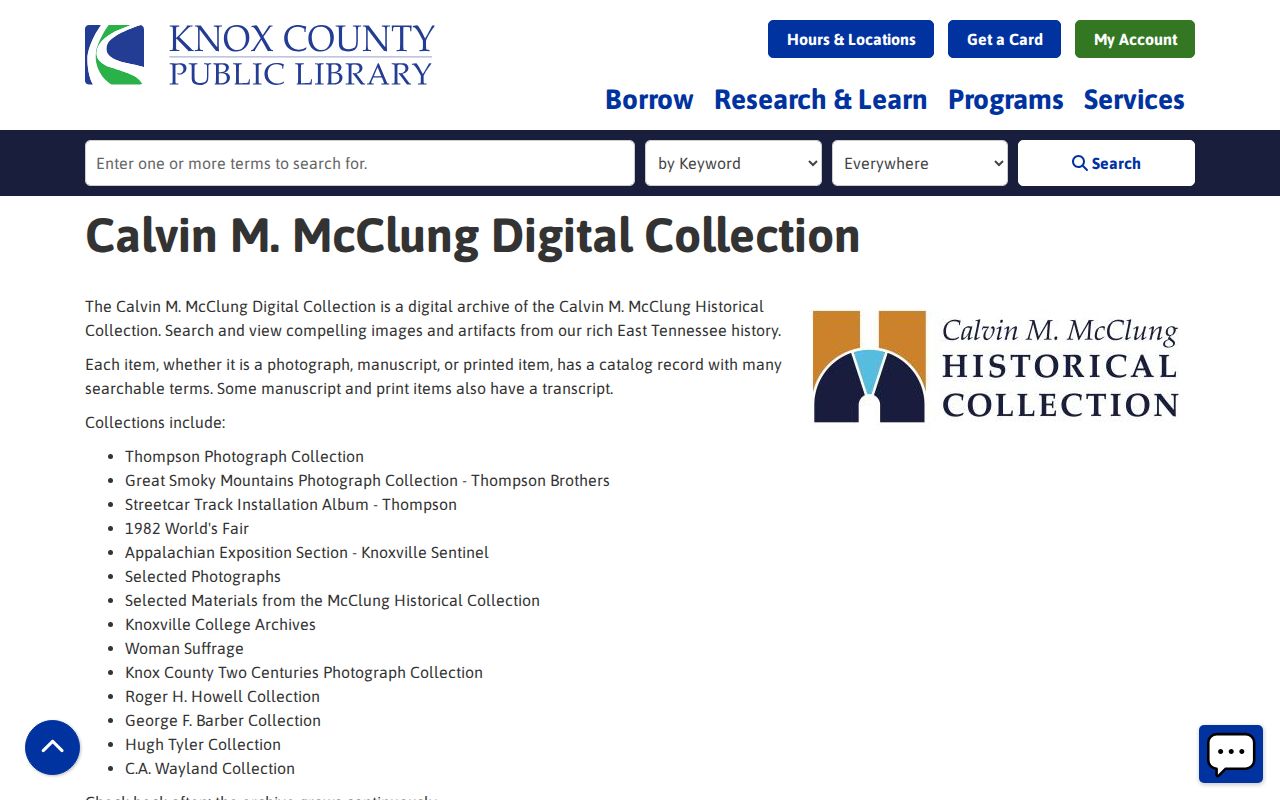
Search a name as an exact phrase, then widen it with a school, street, business, or date. The catalog record should be kept with the image because it supplies the collection and item context.
Trace Historical Knoxville Directories
Knoxville’s directory trail begins before the Civil War and continues into current holdings. A city directory can associate a resident with an occupation, household, business, or street for one publication year. Telephone books add listed subscribers from 1898 forward. Knoxville College yearbooks and catalogs add students, faculty, home addresses, and page references; the digitized 1964 yearbook even includes a full-text student directory and index. UT Special Collections adds institutional records stretching from the university’s 1794 charter.
- Fix the target year and search the nearest city directory.
- Compare the printed address with a phone book or yearbook entry.
- Use KGIS and deed references to identify the parcel and owner.
- Check obituaries, probate, or biography files for relatives and later events.
The method matters after Knoxville’s 1897 Gay Street fire, which destroyed many businesses but was not a courthouse-record loss. Directories, newspapers, and property records can reconstruct commercial occupants. The 1982 World’s Fair archive and UT’s 1891 to 1920 railway and light company papers add names that ordinary household lists may miss. These sources support family history and reconnection work without pretending that every old entry describes a current address.
No single public Knoxville directory is complete. Private congregation, neighborhood, and alumni lists may be closed, and no verified current carrier white-pages product was found. Pair independent official or library sources before deciding two similar names describe the same person.