
Which Knoxville Public Records Are Open
Access turns on both the record and its keeper. A deed filed with the Knox County Register is generally open, while a recent birth certificate at Tennessee Vital Records has strict entitlement rules. Court access depends on the court, date, and case status. The table puts the main Knoxville record sets beside their real custodians, web coverage, and practical fallback.
| Record trail | Keeper | Web coverage | Practical access |
|---|---|---|---|
| Deeds, liens, plats | Knox County Register of Deeds | Free legacy index, 1786-1931; paid active database | Web form, mail, phone, or counter; DD-214 closed |
| Property and GIS | Property Assessor and KGIS | Current roll, parcels, maps, and aerial layers | Free web lookup; Assessor office fallback |
| Local court cases | Separate Circuit, Criminal, Chancery, and City clerks | Coverage varies by court and date | Subscription, clerk counter, or Archives |
| Vital events | State Vital Records, local health office, County Clerk | No open recent name index | Application, ID, entitlement, and fee |
| Jail and offender data | Sheriff, TDOC, and TBI | Separate current agency systems | Free portals; Sheriff counter for local fallback |
| City permits and reports | Knoxville department that created the record | Portal coverage varies | Routed City form or department request |
Tennessee law also protects sealed or expunged cases, juvenile and adoption files, government identification numbers, protected voter data, Safe at Home addresses, and recent vital documents. A visible index entry may prove that a filing exists without opening every image or fact in the underlying file.
Knoxville Records Have Three Keepers
The City County Building places major Knoxville and Knox County offices under one roof, but it does not merge their legal custody. Knoxville handles municipal administration, police, fire, development, codes, and City requests. Knox County keeps deeds, assessments, taxes, marriage licensing, jail information, elections, and most trial-court material. Tennessee controls statewide vital certificates, corrections, regulatory licenses, business entities, and appellate files.
The City publishes a custodian-by-custodian request guide. Its routing matters. General files go through the central process, while E-911, fire, police, development, purchasing, and utility records go to their actual keepers. KUB, for example, is not a City records division.
The official City custodian guide separates department channels before a requester chooses where to send a record description.
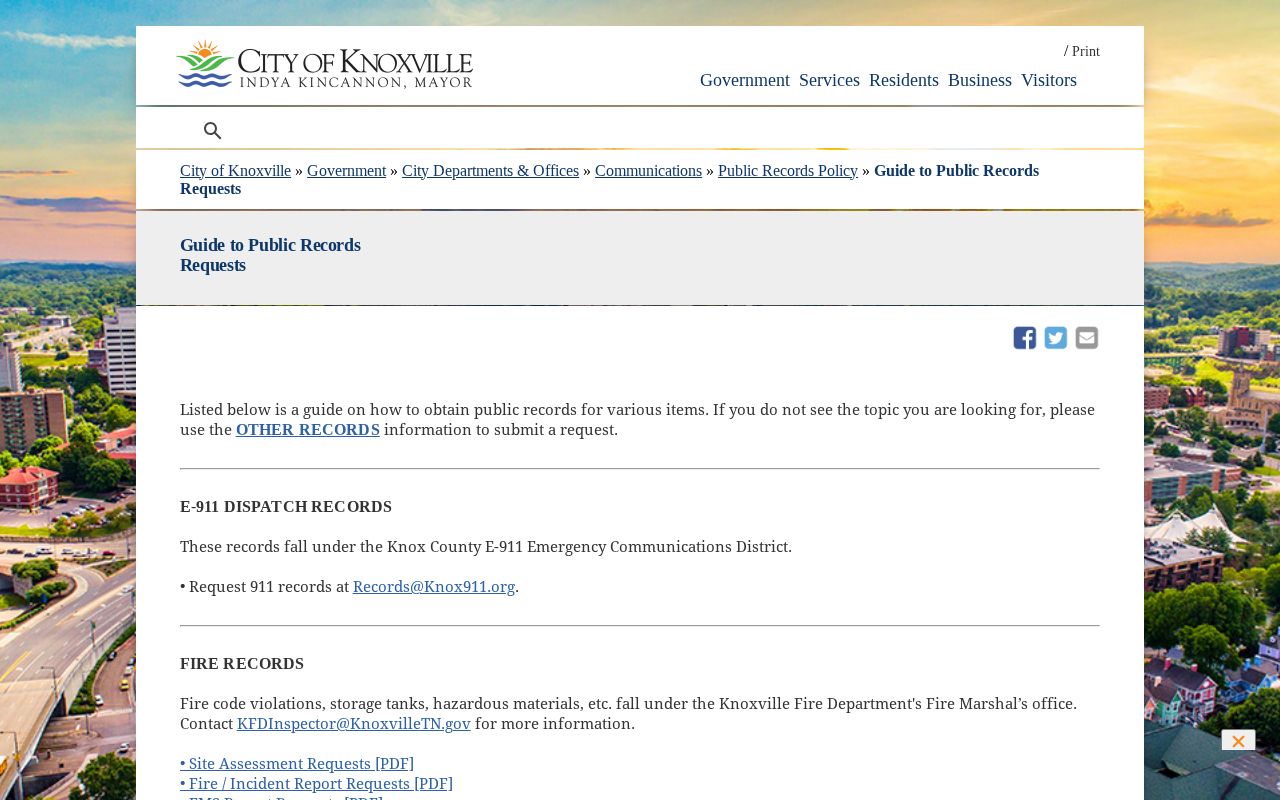
Its department split helps prevent a request from reaching an office that never created the file. Note: A shared street address does not make City, County, court, and utility files one combined record system.
Knoxville Records in the Deed Index
The Knox County Register preserves real-property instruments dating to the late 1700s. Its free legacy search covers 1786 through 1931, but it is not a modern text box. Users browse scanned alphabetic index pages in four groups: people grantors, corporate grantors, people grantees, and corporate grantees. A grantor gives or transfers an interest. A grantee receives it.
| Legacy control | Input | Required | Use |
|---|---|---|---|
| Index family | Selection | Yes | Person or corporation; grantor or grantee |
| Alpha range | Selection | Yes | Choose the surname range |
| Page | Image page | Yes | Open the scanned index sheet |
| Book mode | Book type, book, page | As used | Retrieve a known book reference |
Use the legacy deed index to choose the correct index family and scanned page.
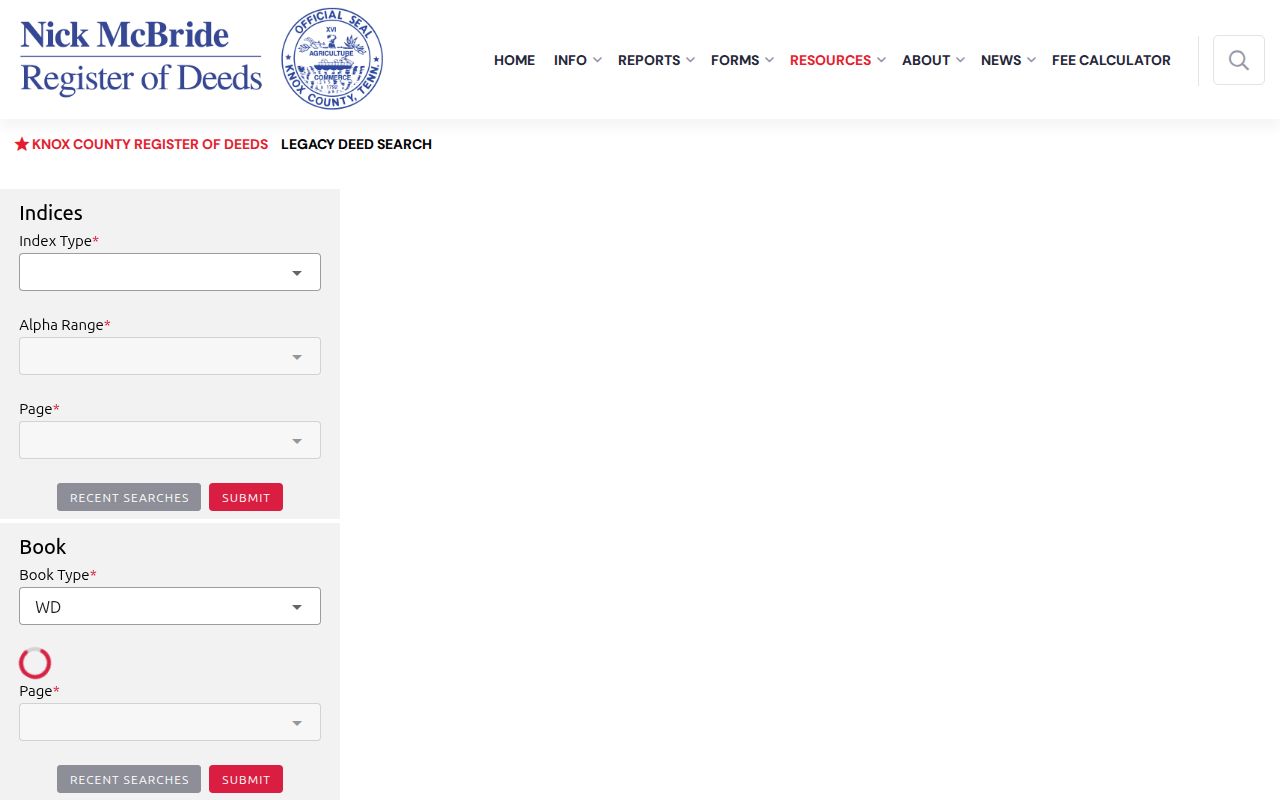
Its scanned pages can supply the book and page needed for the recorded instrument. The active remote database costs $40 per month, and opening an account requires six months prepaid plus a $25 setup fee, for $265 at signup. Counter inspection remains the key alternative.
Knoxville Property Records in KGIS
The free Property Assessor lookup searches current owner name, property address, or parcel number after the user accepts its disclaimer. KGIS Maps adds Address, Parcel, Owner, Place, and Other search modes, plus parcel layers and aerial imagery. Owner search permits a substring, so a partial name may return a longer assessed-owner entry.
A parcel result can show the owner, owner mailing address, site address, parcel ID, subdivision and lot, deed reference, acreage, ward or tax district, value, and building facts. Mailing address means the destination for tax mail, not proven residence. The situs address is the land's location. City parcels normally display a ward; parcels outside the City display a county tax district instead.
KGIS tip. The full-address-details control may reveal the owner mailing address before the full assessor card opens. A missing web name may reflect the Assessor's unlisted-ownership process, not the absence of a government record.
KGIS is a discovery layer, not proof of title. Use its deed reference to reach the Register, then compare the legal description, plat, and recorded parties. Note: A postal address labeled Knoxville may lie beyond City limits, so check KGIS jurisdiction fields before requesting permit or code files.
Knoxville Court Records by Clerk
A court name is essential. General Sessions Civil remote filings begin October 4, 2017, and Circuit Court remote filings begin April 14, 2015 through the subscription service. Criminal and General Sessions Criminal files belong to the Criminal Court Clerk, which also handles Fourth Circuit matters. Chancery includes Probate, whose web index covers 1954 through December 31, 2024. Knoxville City Court handles ordinance cases and has no verified public name-search portal.
The free Tennessee Public Case History search reaches Supreme Court, Court of Appeals, and Court of Criminal Appeals records filed after September 1, 2006. Users may search a case number, case style, party name, or business name. A result can show the appellate number, lower court, judge, parties, counsel, milestones, disposition, and linked filings. It is not a full Knox County trial-court index.
- Index
- A finding tool that points to a record; it may not contain the filed image.
- Docket
- The dated list of events and filings in a court case.
- Certified copy
- A custodian-authenticated copy accepted for formal proof.
- Exemption
- A law that requires or permits a custodian to withhold specified information.
For older cases, Knox County Archives can search across Chancery, Circuit, Pleas and Quarter Sessions, probate, wills, naturalizations, marriages, and obituaries. Plain copies cost $2 for the first page and $0.60 for each added page; certified copies cost $5 for the first page plus $0.60 for each added page.
Knoxville Vital Records Have Limits
A public fact is not the same as an unrestricted recent certificate. Under Tenn. Code Ann. § 68-3-205(e), birth records become public after 100 years. Death, marriage, divorce, and annulment records become public after 50 years. Newer certified copies require an eligible requester, identity proof, and, when needed, proof of relationship or legal authority.
Tennessee uses separate applications for birth, death, marriage, and divorce or annulment records. A standard certificate or no-record search costs $15. Mail requests need a signed form, a government ID copy that includes the signature or a notarized application, payment, and supporting proof where entitlement must be shown. Local county health issuance, mail, in-person state service, and the state's official online route are documented channels.
The Tennessee vital-record application page displays the available forms.
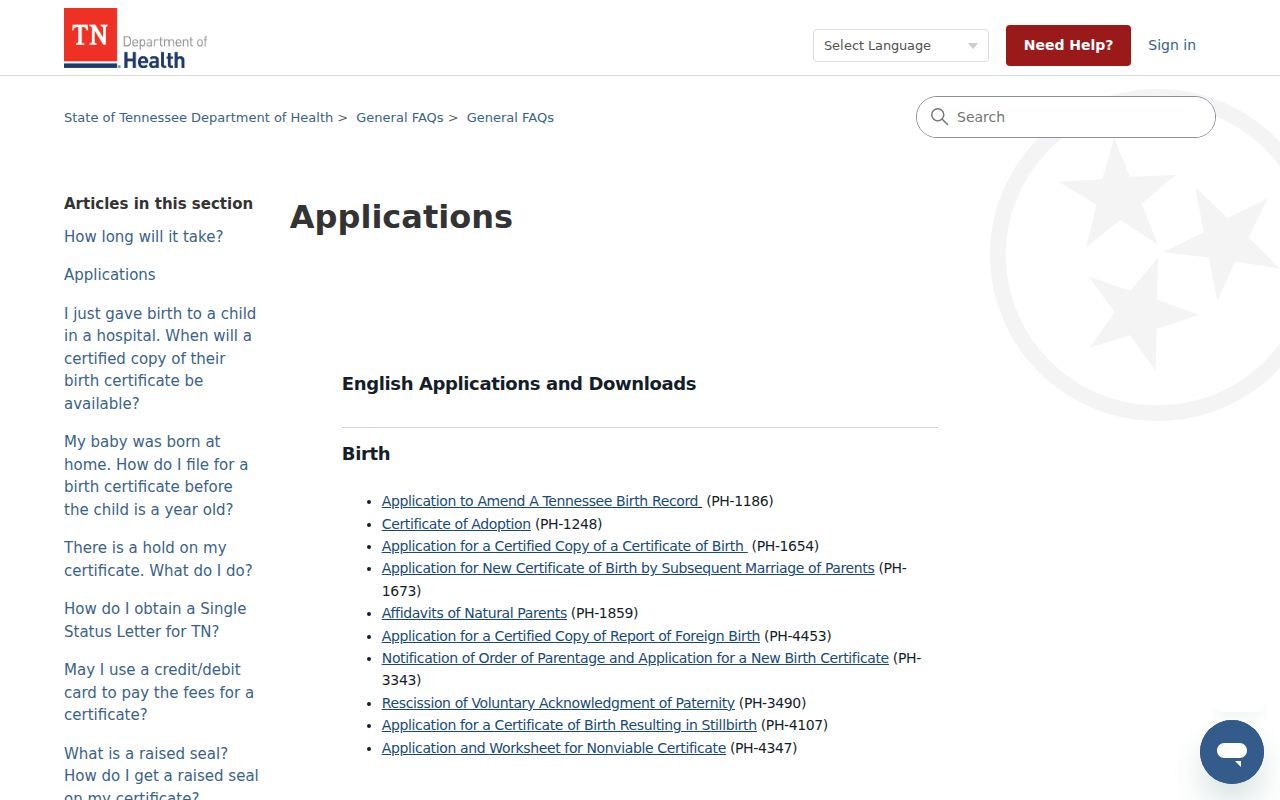
The correct form matters because a state divorce certificate is not the court decree or pleadings. Historical Knox fallbacks include delayed births from 1861-1945, marriage indexes, marriage bonds, partial divorce indexes, church registers, newspapers, cemeteries, and court books.
Knoxville Public Records Custodian Desks
When a portal does not cover the needed year or record, go to the office that holds the source. These desks handle land, property, and major court access. Calling first can confirm the record series, copy method, and any identity or certification need.
Knox County Register of Deeds
400 Main Street, Suite 225
Knoxville, TN 37902
865-215-2330
Records: 865-215-2329
Knox Criminal Court Clerk
400 Main Street, Suite 149
Knoxville, TN
865-215-2375
Knox County Archives
601 S. Gay Street, 2nd floor
Knoxville, TN
865-215-8800
Permanent county records from 1792
The Register also accepts a deed request in person, by mail, by phone, or through its web form.
The deed-copy request form asks for the property address, a current or former owner, an approximate purchase or recording date, the copy or certification need, contact details, and notes.
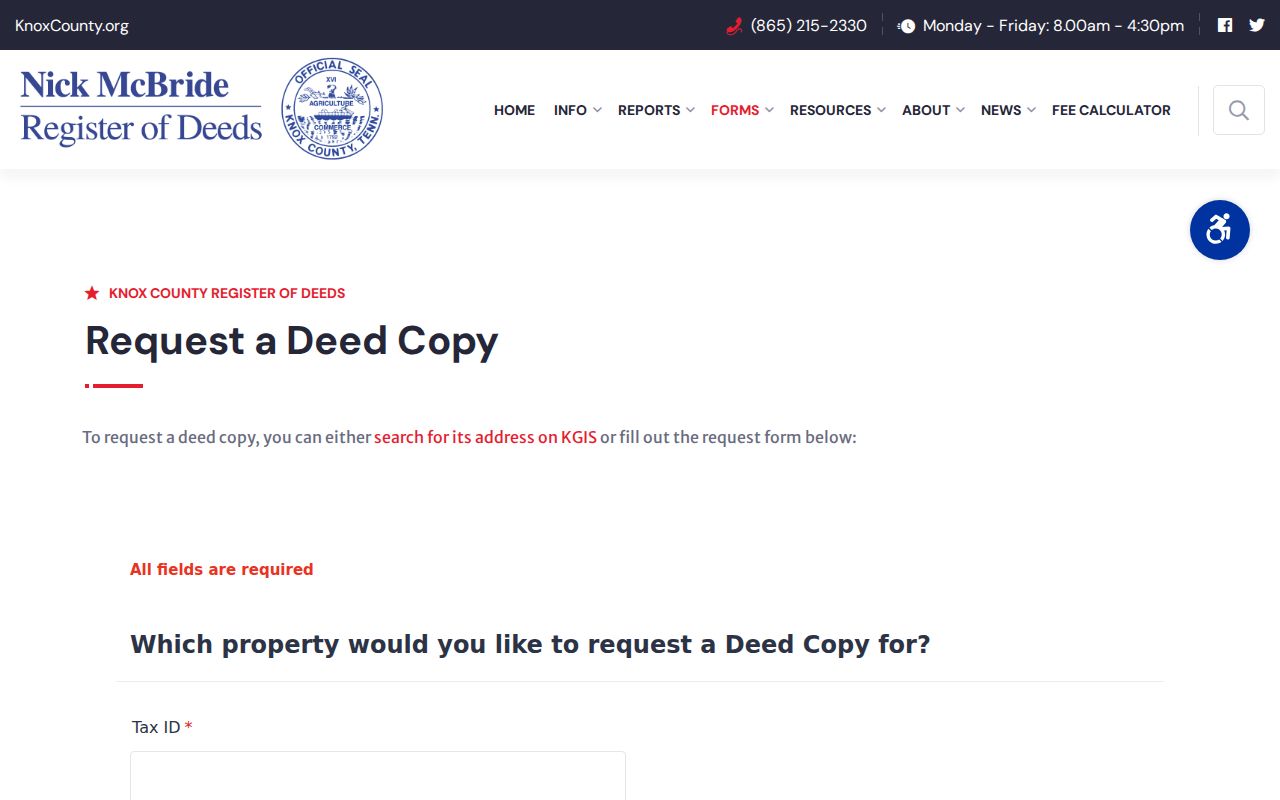
Records staff can use those details to identify a specific instrument, and a certified lost-deed replacement costs $1 per page.
Knoxville Custody Records Stay Separate
The Knox County Sheriff roster, Tennessee Department of Correction FOIL, and TBI Sex Offender Registry describe different legal populations. The Sheriff list concerns current local detention. FOIL covers current or former state felony custody or supervision. The TBI registry covers a statutory registration duty. None replaces the court clerk's charge and disposition record.
Online access is free. If the web roster does not answer a local arrest-history question, the KCSO Public Records window offers a Tennessee-resident fallback. Bring photo ID showing residency plus the subject's name and an identifier such as date of birth. Inspection is free, and copies cost $0.15 per page. The same window handles warrant inquiries. Incident reports may be requested online, by email, or in person.
Can a registry entry be used to contact someone? No. TBI warns that harassment, intimidation, threats, stalking, or retribution may violate civil or criminal law. The entry reports official registry status, not permission for contact.
Note: Federal custody from 1982 forward uses the BOP locator, while older federal custody research goes to the National Archives.
Knoxville Records Fees and Fallbacks
Inspection under the Tennessee Public Records Act is free unless another law authorizes a charge. The statewide copy schedule is $0.15 for a standard black-and-white page and $0.50 for a standard color page unless actual cost is higher. Copy production may also include permitted labor after the agency's threshold. Electronic inspection is free, though electronic copies can include labor, redaction-paper, and storage-media costs.
Office-specific charges differ. Register certified deed copies are $1 per page. Tennessee vital certificates and no-record results are $15. City Development Services generally charges $50 to create a compiled report for a specific address, which is distinct from inspecting an existing record. Current remote deed access is a paid subscription, while the historic index and counter inspection remain alternatives.
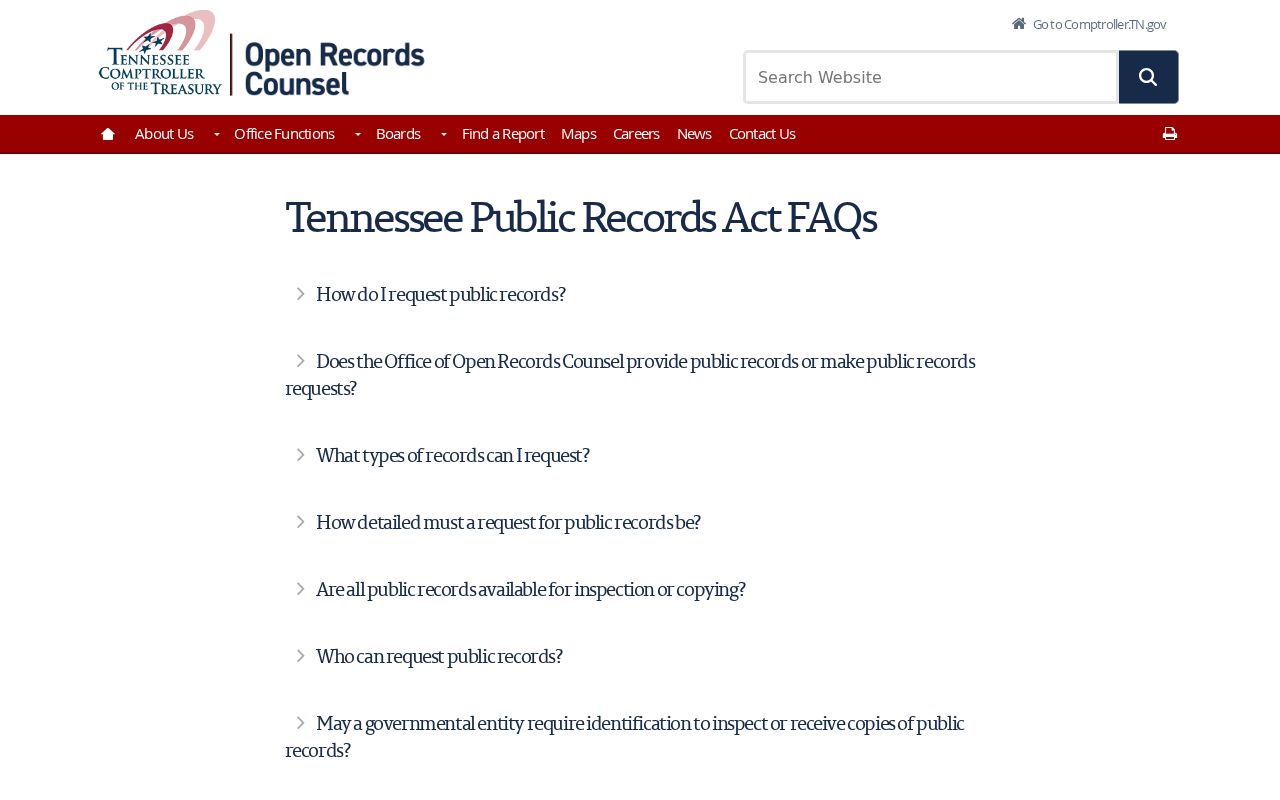
The Office of Open Records Counsel TPRA guidance explains inspection, timing, and fee rules.
Ask for an estimate before copies are made, and switch to inspection first when the volume or scope is unclear.
Knoxville Records the Law Protects
Open government does not mean every fact is open. Juvenile and adoption files, sealed or expunged cases, Social Security and government identification numbers, protected victim information, and recent vital certificates have statutory limits. The Register keeps DD-214 military discharges confidential. Driver records are subject to the federal Driver's Privacy Protection Act, not the ordinary open-record rule.
Safe at Home gives qualifying victims a substitute address and mail forwarding through the Tennessee Secretary of State. It does not change identity, remove old public files, or erase legal duties. Property listing, tax assessment, and recorded real-property instruments have statutory exceptions where the substitute address cannot simply replace the true location.
The City public-record form and policy show the Tennessee citizenship and identification process. A denial should identify the legal basis for withholding a record or redacting part of it. The custodian may release the open portion rather than the protected fields.
Knoxville Deed Records and Fraud Alerts
In June 2026, the Knox County Register warned residents about a bogus official-looking property postcard that demanded immediate attention. The safe response is to verify the claim with the Register instead of paying or contacting the sender. The office also offers free AlertMe enrollment for personal or business names.
AlertMe sends an email when a newly recorded instrument matches an enrolled name. It is a notice tool. It does not block a filing, decide whether a document is fraudulent, clear title, or replace a review of the instrument. Name variants may matter because the match is name based.
A deed copy should come from the Register's public-record channel rather than a high-price mail solicitation. The official source preserves the instrument number, recording date, parties, document type, book or page, legal description, and scanned image where public. Those fields help distinguish a genuine land record from marketing that only mimics government formatting.
Request Knoxville Public Records Precisely
The Tennessee Public Records Act, Tenn. Code Ann. §§ 10-7-501 through 10-7-515, gives Tennessee citizens an inspection right subject to exemptions. Readily available files should be produced promptly. If prompt production is not practical, the custodian has seven business days to produce the record, deny the request in writing with a legal basis, or explain the delay and give a reasonable production timeframe. Seven days is a response deadline, not always a completion deadline.
The City of Knoxville records policy and request forms provide the municipal route.
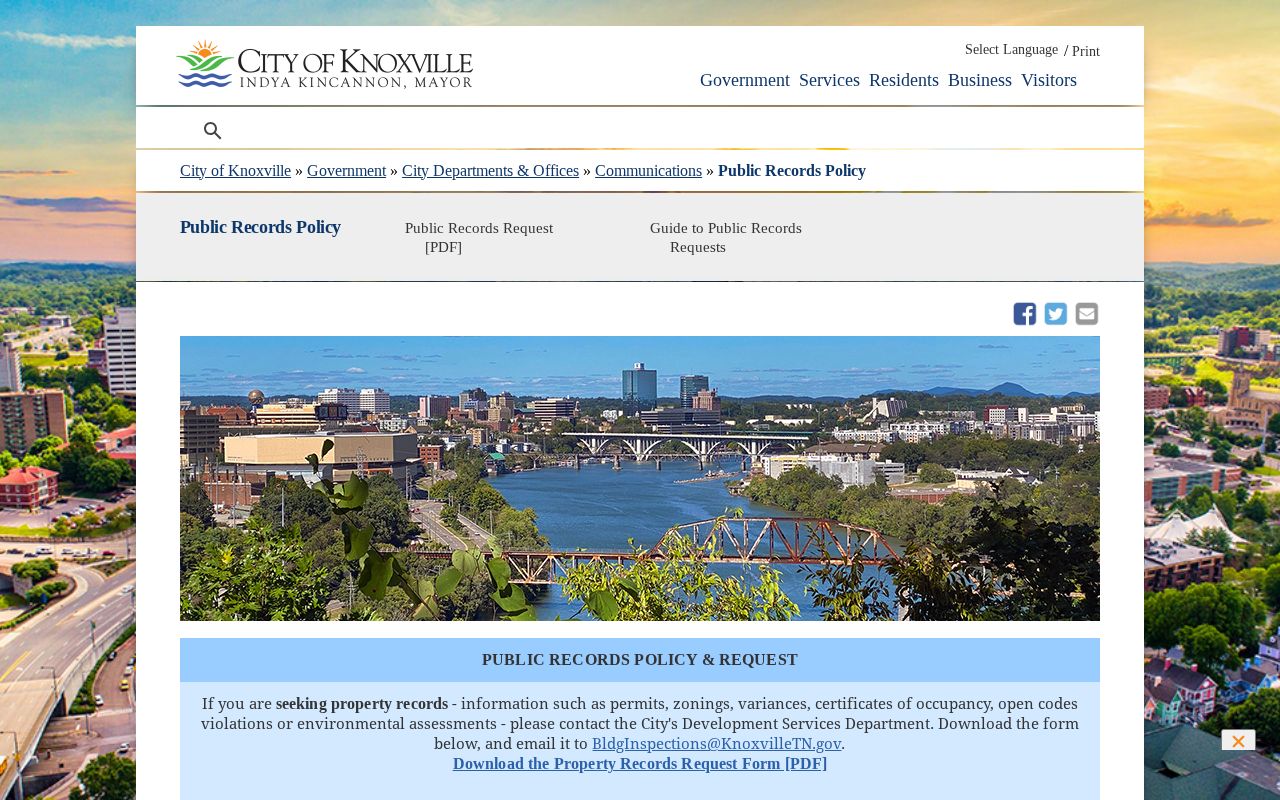
The form route works best when the record description is narrow and the correct department is named.
- Choose the creating custodian. Separate City, County, court, and state offices before sending anything.
- Define the file. Give the record type, names, focused dates, and any address, parcel, case, or instrument number.
- Choose inspection or copies. State the delivery format and provide proof of Tennessee citizenship when the office requires it.
- Ask for a cost estimate. Narrow a large request before labor or copy charges build.
- Address a denial. Ask the custodian to cite each exemption, then seek Open Records Counsel guidance, mediation, or court review when needed.
Lawful personal use. Open access supports family research, ownership checks, civic review, and scam prevention. Never use a Knoxville record to stalk, harass, threaten, intimidate, or harm another person.
Agencies do not have to create a record that does not exist. A clear request for an existing file is faster to route, easier to estimate, and less likely to confuse an index search with a demand for a new report.